Blinds are one of those things nobody notices until they’re dirty. One afternoon the sun cuts through your window at just the right angle, and suddenly you can see every layer of dust sitting on the slats. Learning how to clean blinds at home doesn’t have to eat up your whole weekend, though. Once you know the right method for your specific blinds material, many routine blind-cleaning jobs can be completed in just a few minutes per window.
This guide by Blinds Curtain Dubai walks through routine dusting, deep cleaning by blind type, the bathtub soak method, natural cleaning solutions, and how to deal with yellowing or stubborn grease, so whatever is hanging in your window, you’ll know exactly how to handle it.
Why Blinds Get Dirty So Fast?
Blinds sit directly in airflow near a window, which makes them a magnet for dust, pollen, and pet dander. In kitchens, they also pick up airborne grease from cooking. Left alone, this buildup doesn’t just look bad, it can affect indoor air quality and trigger allergies, especially if anyone in the house has asthma or sinus sensitivity. Cleaning your blinds every couple of weeks keeps this from becoming a bigger chore later.
What You’ll Need
Before starting, gather a few basic supplies. You likely already have most of these at home:
- A microfiber cloth or lambswool duster
- A vacuum with a soft brush attachment
- A bucket of warm water
- Mild dish soap or washing-up liquid
- White vinegar (for a natural degreasing solution)
- An old sock or cotton glove
- A dry towel for drying slats
You won’t need every item for every clean, the tools depend on how dirty the blinds are and what they’re made of.
Step 1: Start With Routine Dusting
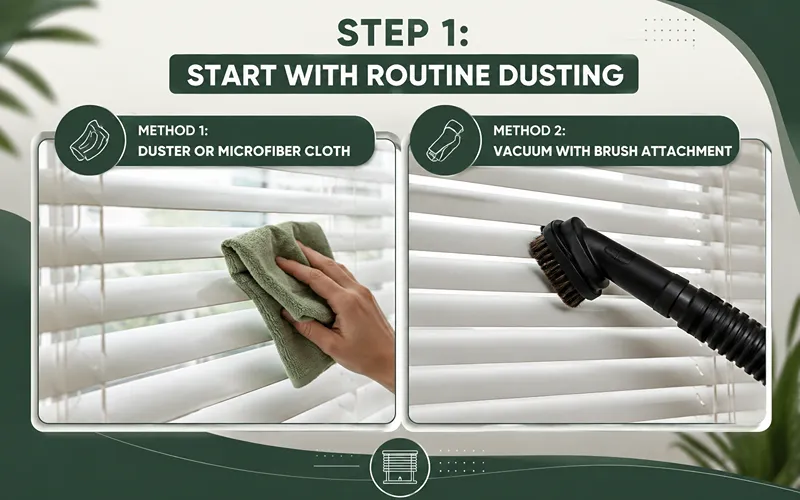
Dusting is the single most effective habit for keeping blinds clean, because it stops grime from ever building up in the first place.
Method 1: Duster or microfiber cloth
Open the blinds fully and wipe each slat from top to bottom, working in one direction. Closing the blinds first can also help, since it gives you a flat surface to wipe across in one pass. Once you’ve gone over the front, tilt the slats the opposite way and repeat on the back.
Method 2: Vacuum with brush attachment
For blinds with heavier dust, a vacuum brush attachment picks up more than a cloth alone. Close the slats, then sweep the attachment from top to bottom, then flip the slats and go over them again. Don’t skip the top rail and the side where the cords sit, dust collects there just as much as on the slats.
Bonus tip: After dusting, wipe the slats with a dryer sheet. It reduces static, which means less dust settles back on the blinds over the following week.
Try to fit this into your regular cleaning routine, whenever you vacuum the floors is a natural trigger to grab the brush attachment for the blinds too.
Check the Manufacturer’s Instructions First
Before you move on to any deep cleaning, take a moment to check the manufacturer’s care instructions. Different blinds can have different finishes, coatings, fabrics, and mechanisms, so a cleaning method that’s perfectly safe for one product may damage another. When in doubt, test any cleaning solution on a small, hidden area first, a corner slat or the underside of a vane, before applying it to the whole set.
Step 2: Deep Clean Based on Your Blinds Material
Not all blinds can be cleaned the same way. Wood reacts badly to water, while aluminum and vinyl can handle a full soak. Here’s how to approach each type.
Wood and Faux Wood Blinds
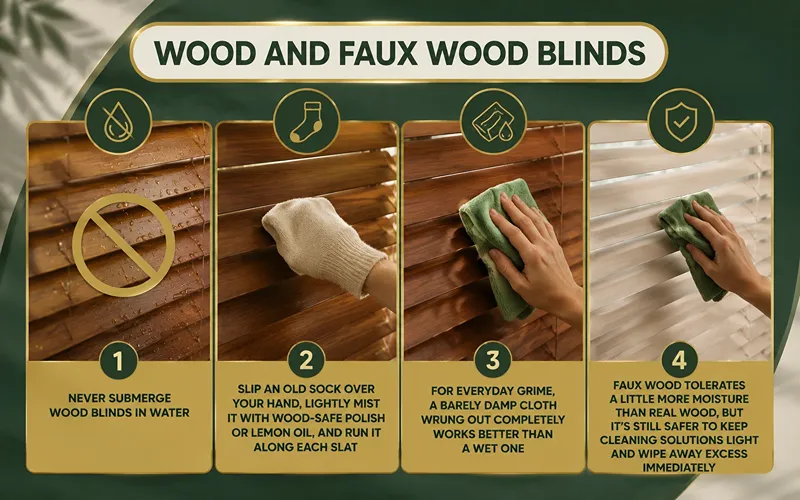
Wooden blinds are the trickiest to clean because moisture can warp the slats or damage the finish over time.
- Never submerge wood blinds in water.
- Slip an old sock over your hand, lightly mist it with a wood-safe polish or lemon oil, and run it along each slat.
- For everyday grime, a barely damp cloth wrung out completely works better than a wet one.
- Faux wood tolerates a little more moisture than real wood, but it’s still safer to keep cleaning solutions light and wipe away excess immediately.
Aluminum and Vinyl (Venetian) Blinds
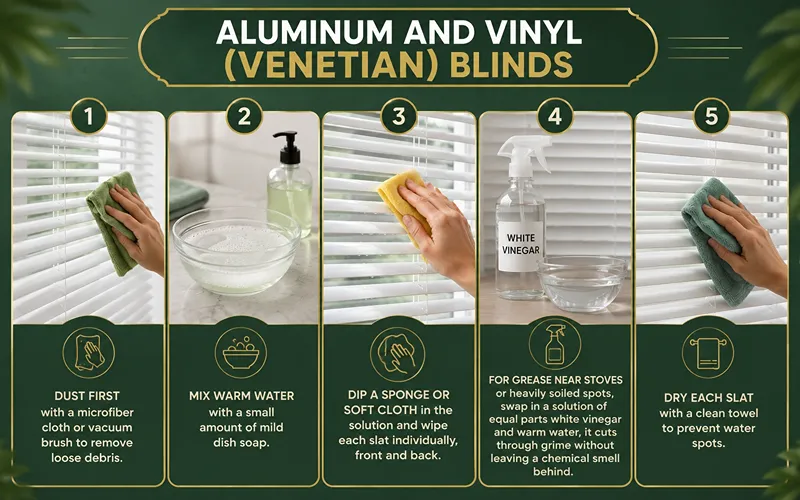
Venetian Blinds are the most forgiving type and can handle a proper wash.
- Dust first with a microfiber cloth or vacuum brush to remove loose debris.
- Mix warm water with a small amount of mild dish soap.
- Dip a sponge or soft cloth in the solution and wipe each slat individually, front and back.
- For grease near stoves or heavily soiled spots, swap in a solution of equal parts white vinegar and warm water, it cuts through grime without leaving a chemical smell behind.
- Dry each slat with a clean towel to prevent water spots.
Vertical Blinds
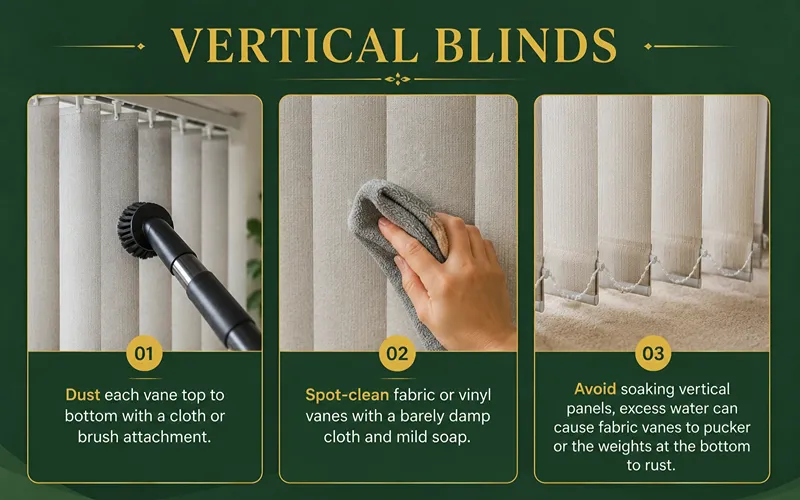
Vertical blinds are best cleaned while still hanging, since taking down every panel is impractical.
- Dust each vane top to bottom with a cloth or brush attachment.
- Spot-clean fabric or vinyl vanes with a barely damp cloth and mild soap.
- Avoid soaking vertical panels, excess water can cause fabric vanes to pucker or the weights at the bottom to rust.
Fabric Blinds: Cellular, Roman, and Roller Shades
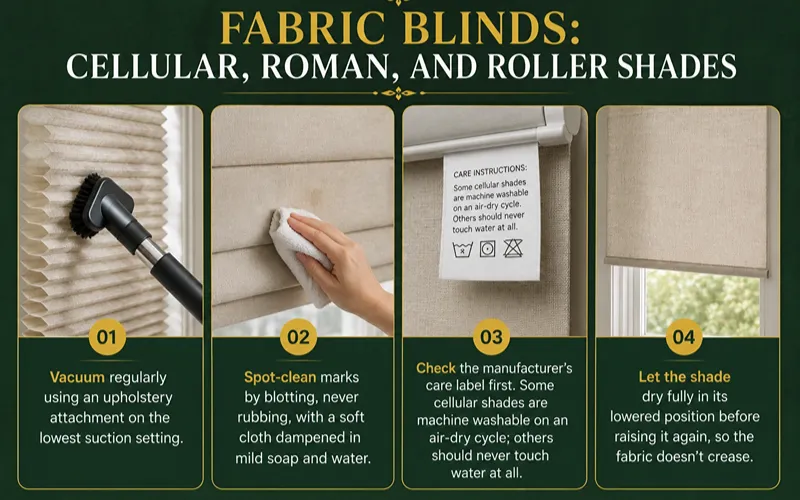
Fabric-based window treatments need a gentler touch since water can leave visible rings or shrink the material.
- Vacuum regularly using an upholstery attachment on the lowest suction setting.
- Spot-clean marks by blotting, never rubbing, with a soft cloth dampened in mild soap and water.
- Check the manufacturer’s care label first. Some cellular shades are machine washable on an air-dry cycle; others should never touch water at all.
- Let the shade dry fully in its lowered position before raising it again, so the fabric doesn’t crease.
The Bathtub Method for Heavily Soiled Blinds
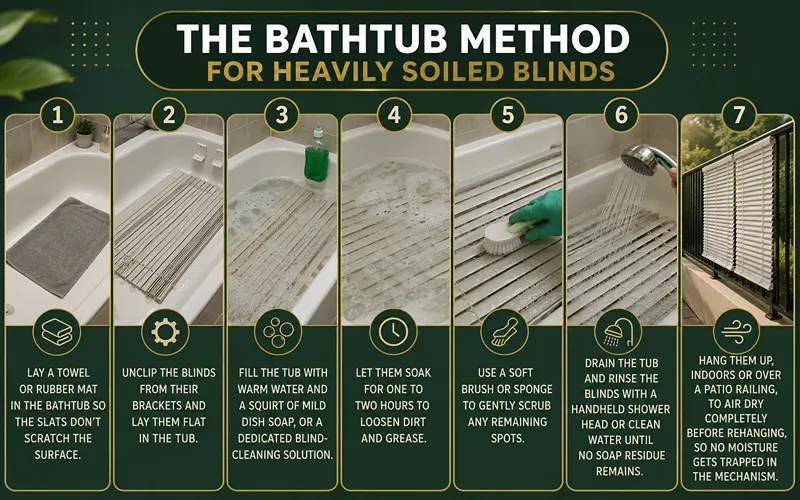
When dusting and spot-cleaning aren’t enough, soaking is the fastest way to restore aluminum, vinyl, or plastic blinds that have years of grime built up. This method isn’t suitable for wood or fabric blinds.
- Lay a towel or rubber mat in the bathtub so the slats don’t scratch the surface.
- Unclip the blinds from their brackets and lay them flat in the tub.
- Fill the tub with warm water and a squirt of mild dish soap, or a dedicated blind-cleaning solution.
- Let them soak for one to two hours to loosen dirt and grease.
- Use a soft brush or sponge to gently scrub any remaining spots.
- Drain the tub and rinse the blinds with a handheld shower head or clean water until no soap residue remains.
- Hang them up, indoors or over a patio railing, to air dry completely before rehanging, so no moisture gets trapped in the mechanism.
If your blinds are too wide for the tub, the same process works outdoors on a clean tarp or blanket, using a garden hose instead of a shower head for rinsing.
How to Whiten Yellowed Blinds?
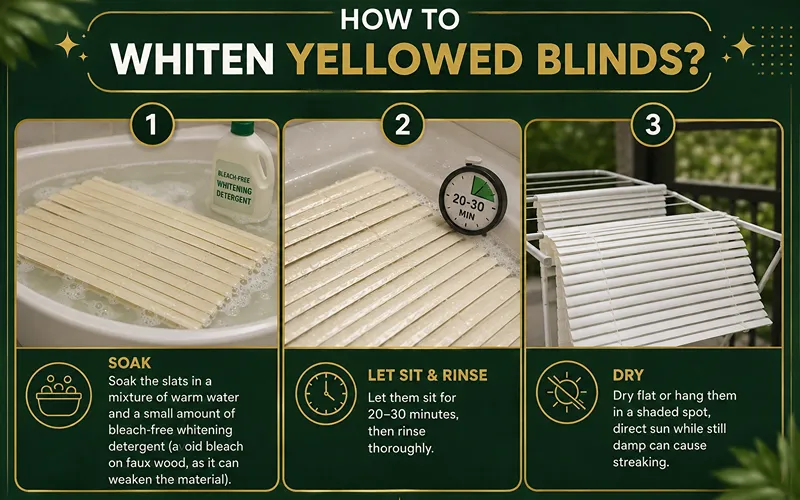
Sun exposure can turn plastic or vinyl blinds a dull yellow over time. To brighten them:
- Soak the slats in a mixture of warm water and a small amount of bleach-free whitening detergent (avoid bleach on faux wood, as it can weaken the material).
- Let them sit for 20–30 minutes, then rinse thoroughly.
- Dry flat or hang them in a shaded spot, direct sun while still damp can cause streaking.
This won’t reverse severe sun damage, but it noticeably lifts general yellowing caused by dust and UV exposure.
Removing Mold or Mildew From Blinds
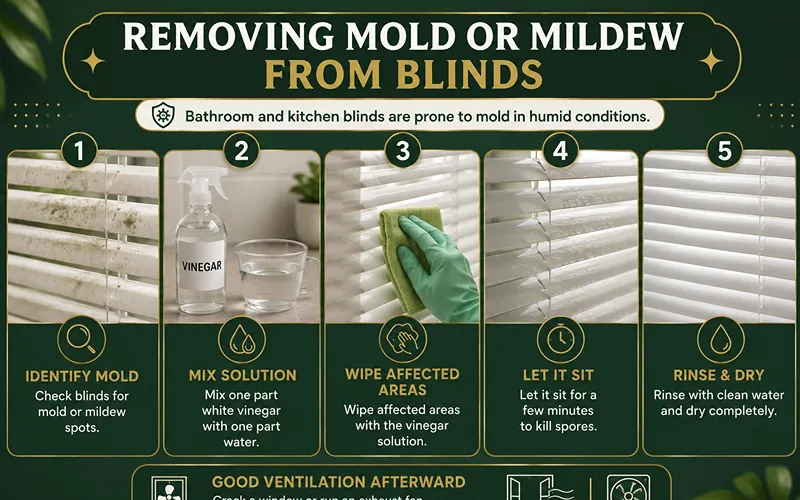
Bathroom and kitchen blinds are prone to mold in humid conditions. Wipe affected areas with a solution of one part white vinegar to one part water, let it sit for a few minutes to kill spores, then rinse and dry completely. Good ventilation afterward, cracking a window or running an exhaust fan, helps stop it from coming back.
How Often Should You Clean Your Blinds?
| Task | Frequency |
| Dusting | Weekly |
| Wipe-down with soap and water | Every 2 months |
| Deep clean or bathtub soak | 1-2 times a year |
| Kitchen blinds (grease-prone) | Every 2-3 weeks |
Kitchen and bathroom blinds need more frequent attention than blinds in a bedroom or hallway, simply because of the grease, steam, and humidity they’re exposed to.
Common Mistakes to Avoid
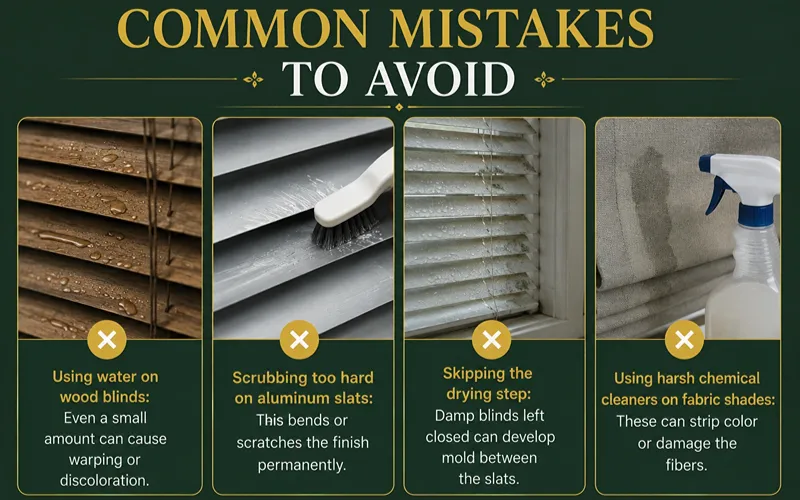
- Using water on wood blinds: Even a small amount can cause warping or discoloration.
- Scrubbing too hard on aluminum slats: This bends or scratches the finish permanently.
- Skipping the drying step: Damp blinds left closed can develop mold between the slats.
- Using harsh chemical cleaners on fabric shades: These can strip color or damage the fibers.
Final Thoughts
Clean blinds make a bigger difference to a room than most people expect, they let in more light, reduce allergens, and simply look better maintained. The trick isn’t a single miracle product; it’s matching your cleaning method to the material and staying consistent with a quick weekly dusting so deep cleans stay rare. Once you’ve done it the right way one time, it becomes a five-minute habit instead of a dreaded chore.
Frequently Asked Questions
Can I clean blinds without taking them down?
Yes. Dusting, vacuuming, and spot-cleaning with a damp cloth can all be done while blinds are still hanging. Only heavy soaking requires removing them.
What’s the best homemade blind cleaner?
A mix of equal parts white vinegar and warm water works well for cutting grease and grime on aluminum, vinyl, and plastic blinds without leaving a residue.
How do I clean blinds without leaving streaks?
Use a barely damp cloth rather than a soaking wet one, and always finish with a dry towel to remove leftover moisture before it evaporates unevenly.
How do I clean greasy blinds in the kitchen?
Wipe them with a solution of equal parts white vinegar and warm water, it cuts through cooking grease better than soap alone. For heavy buildup near the stove, let the solution sit for a minute or two before wiping so it has time to break down the residue.
Can you wash blinds in the bathtub?
Yes, for aluminum, vinyl, or plastic blinds. Lay a towel down to protect the tub, soak the slats in warm soapy water for an hour or two, then rinse and dry them fully before rehanging. This method isn’t suitable for wood or fabric blinds.
Are dryer sheets actually useful for blinds?
Yes, wiping slats with a used dryer sheet after dusting reduces static, which slows down how quickly dust resettles on the surface.